

View underlying data
When viewing, exploring, or editing a workbook, all data elements appear at their designed size so that multiple elements fit on the canvas. To focus on details and view the underlying data, you can maximize an individual data element to full screen:
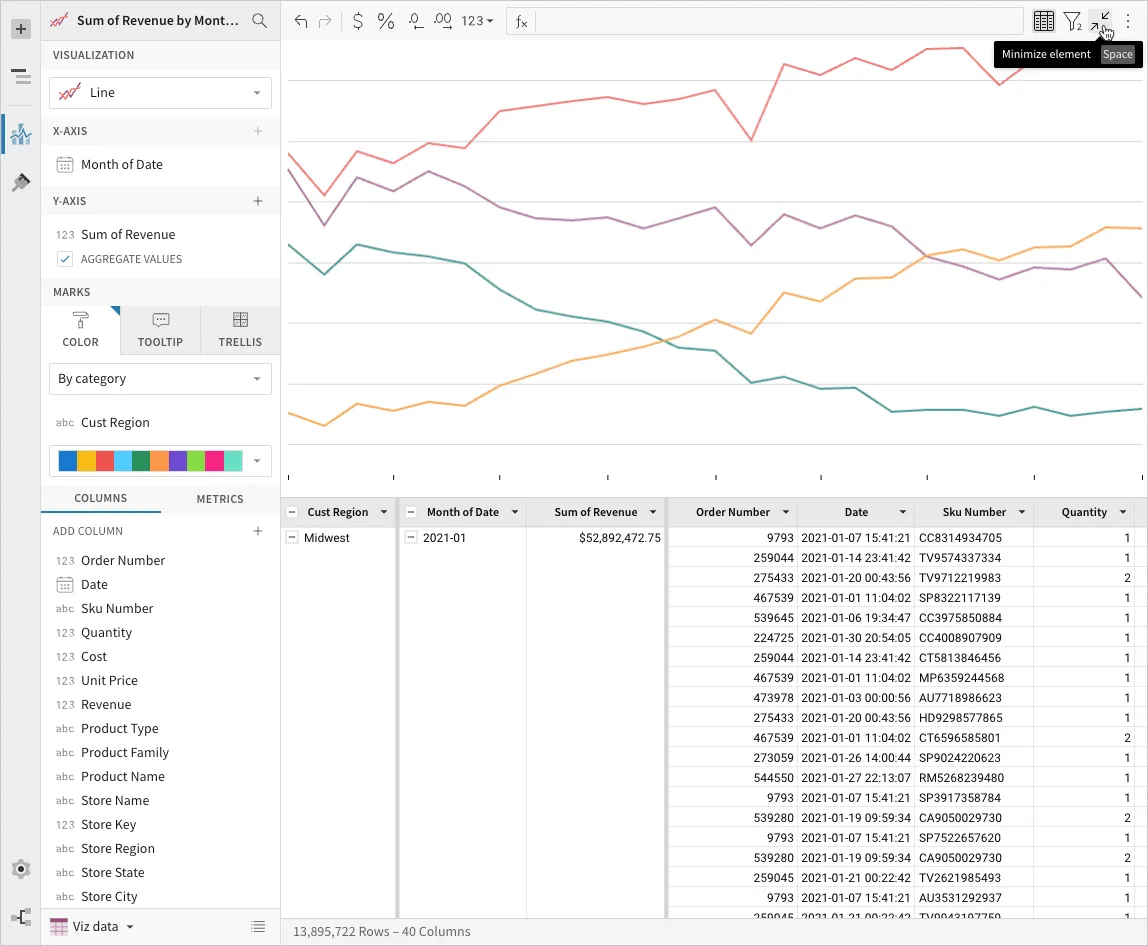
- When you maximize a chart or pivot table, the element expands to the full width of the workbook page and displays the element’s underlying data table. Because the element and underlying data are inherently linked, changes applied to one are automatically reflected in the other.
- When you maximize a table element, it expands to fill the entire workbook page. The underlying data doesn’t need to be displayed in an additional table because it’s already exposed in the table itself.
The granularity of the underlying data you see depends on your access to the workbook. With Can view access, the underlying data is aggregated to match the visualization. With Can explore or Can edit access, you can also view and drill into unaggregated, row-level underlying data. For a comparison of these access levels, see Basic explore vs. Full explore.
Data elements can be maximized in any workbook mode, but changes can be made in Explore and Edit modes only.
Maximize a data element
-
Hover over or select the data element.
-
In the element toolbar, click
 Maximize element.
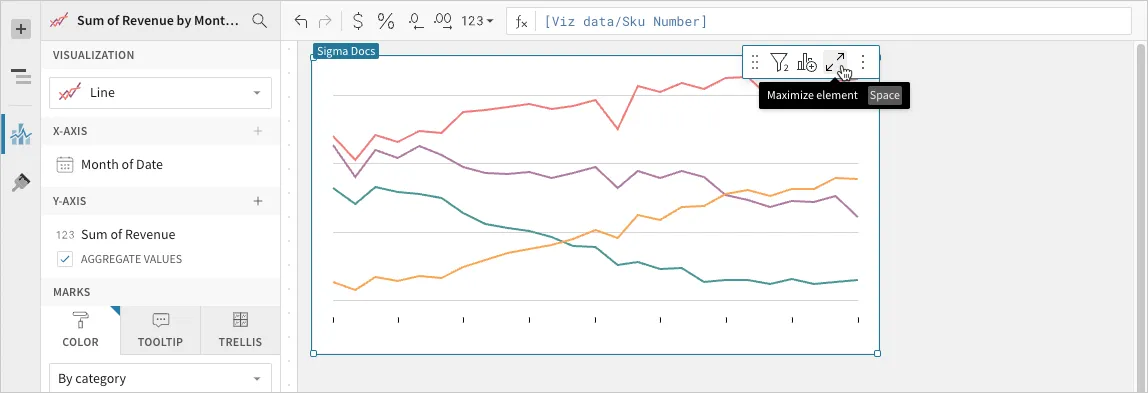
If you are viewing a cartesian chart with Aggregate values unchecked, the underlying data also displays as ungrouped, matching the chart.
Minimize a data element
-
In the page toolbar, click
 Minimize element.
Interactive demo
Hover over the embedded bar chart to display the element toolbar in the upper-right corner of the element.
- To maximize the chart and view the underlying data table, click Maximize element.
- To return to the full workbook canvas, click Minimize element.